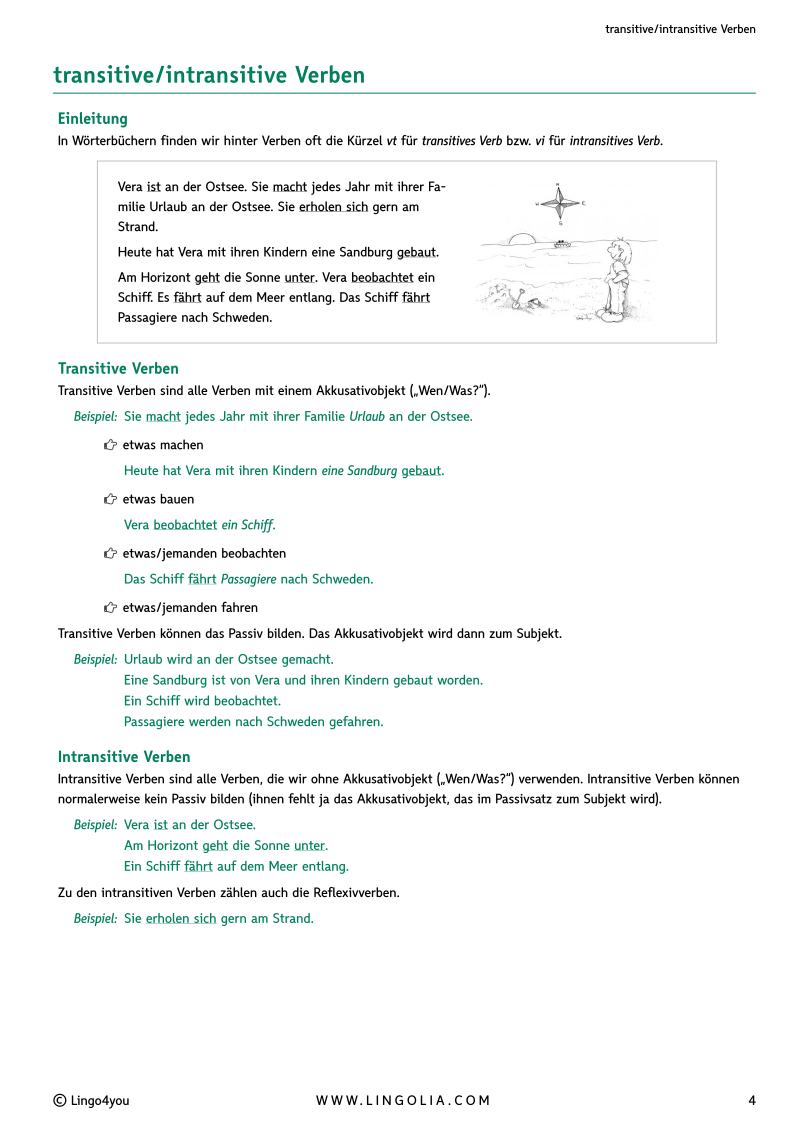
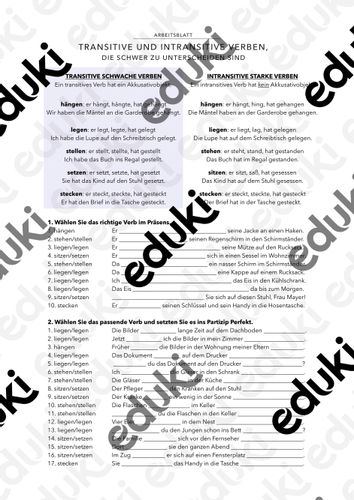
A transitive verb is one that only makes sense if it exerts its action on an object. An intransitive verb will make sense without one. Some verbs may be used both ways.
The word transitive often makes people think of transit, which leads to the mistaken assumption that the terms transitive and intransitive are just fancy ways of describing. The intransitive phrasal verbs do not have a direct object. In english grammar, the object refers to the words or part of the sentence that is generally affected by the action of the words.
Examples of transitive phrasal verbs. Following is a list of common transitive phrasal verbs. Transitive verbs are the most common kinds of verbs in english.
They are action verbs that take a direct object, which is someone or something that receives the action of the verb. The direct object can be a noun, a phrase, or a pronoun. He kicked the table.
( kicked is the verb, table is the object) picasso painted the canvas. Verbs that require a subject but don't require (or cannot accept) an object are called intransitive, for example the verbs to 'die', 'sleep' or 'snow'. It is not possible to 'die', 'sleep' or 'snow' something.
Transitive verbs that are able to take both a direct object and an indirect object are called ditransitive. Identifying the direct object. If you want to identify the direct object in a sentence, you can follow these steps:
Ask what (or whom ?) if there is an answer to this question, the verb is transitive and if there is no answer to the question, the verb is. Transitive verbs (by this i mean verbs used in a transitive way) need an object after them, (they can take direct or indirect objects). Intransitive verbs (by this i mean verbs used in an intransitive way) do not need an object, but they can be followed by a complement, usually an adjective or adverb.
Here are some intransitive verb examples: When he finished the race, he barfed. Water evaporates when it’s hot.
He’s been singing all day. You’ve grown since i last saw you. Learn list of 100+ intransitive verbs in english.
There's no object. ) many verbs have a transitive and an intransitive form: John ate the pizza (transitive). Also, some verbs that have more than one meaning can be transitive or intransitive depending on which meaning is being used.
I see the mountains (see = see with your eyes, transitive). Transitive and intransitive verbs 2. Transitive verbs a transitive verb, used with a direct object, transmits action to an object and may also have an indirect object, which indicates to or for whom the action is done.
Transitive or intransitive verb exercise. Transitive verbs are those verbs that have an object. Intransitive verbs are those verbs that do not have an object.
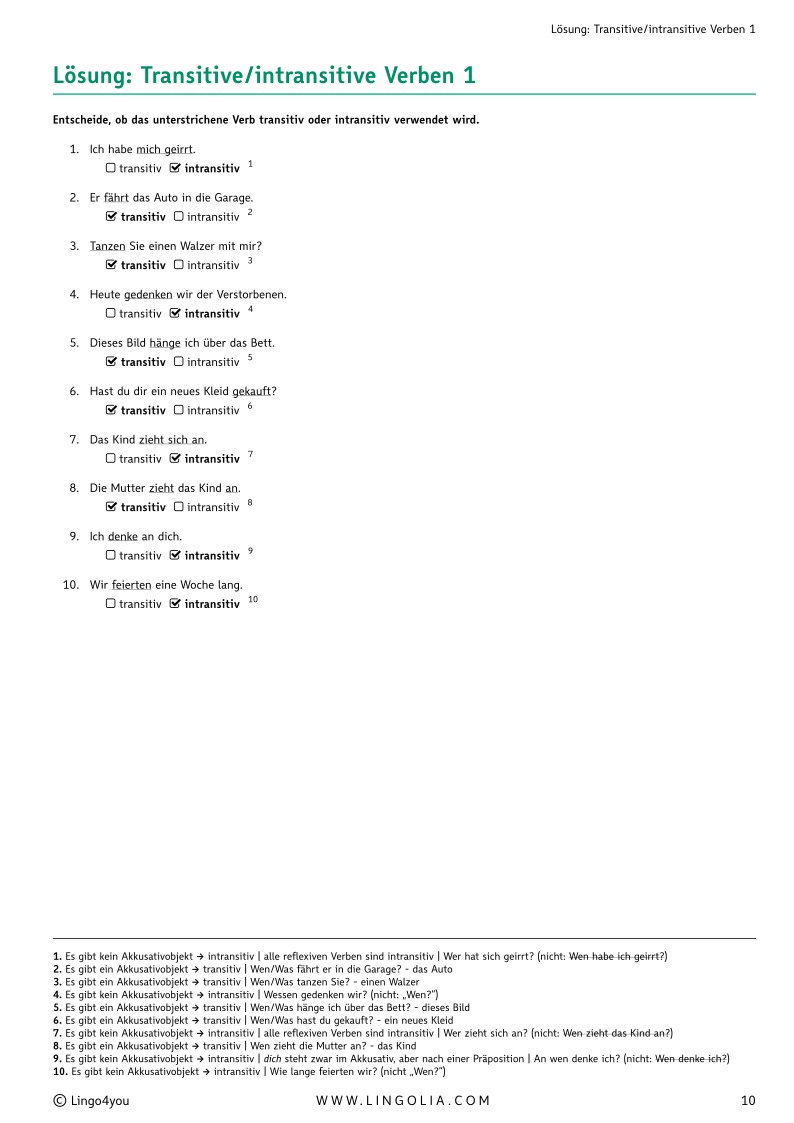
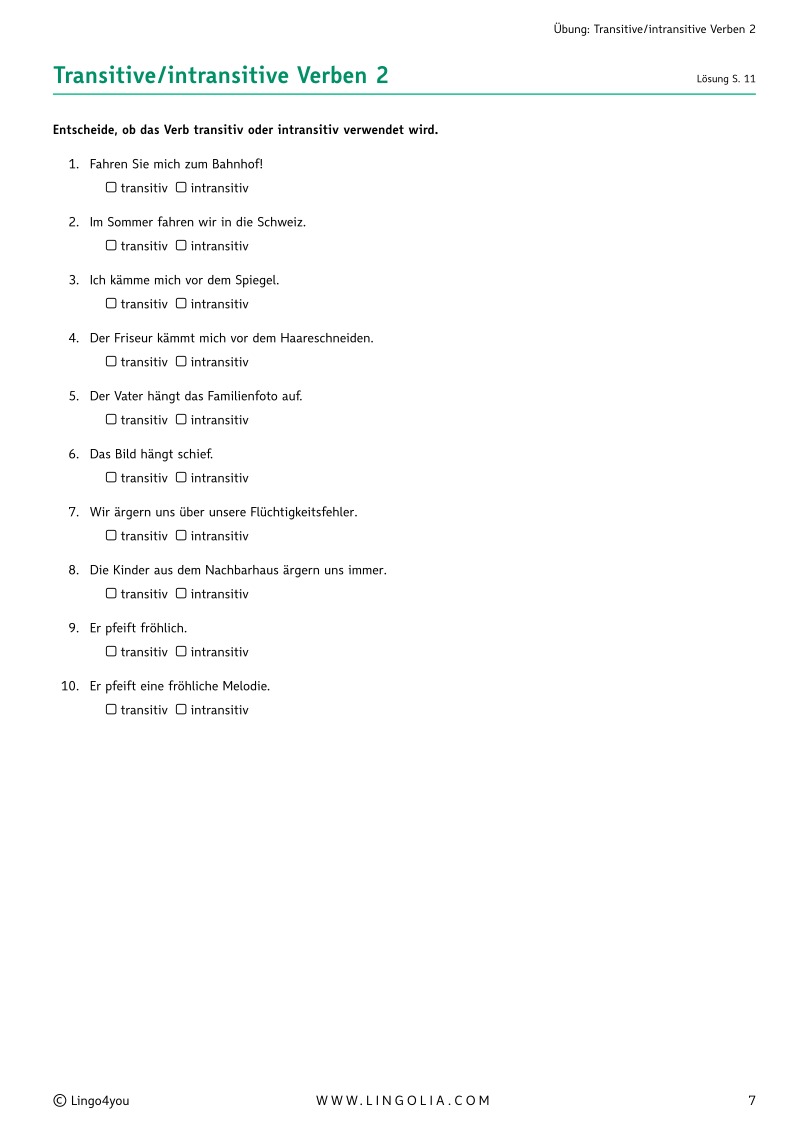
State whether the verbs in the following sentences are transitive or intransitive. She advised me to consult a doctor. The dog was barking loudly.
(intransitive) you are barking up the wrong tree. (transitive) the cat sat on the table. (intransitive) she put the books on the table.
(transitive) please get the cat off the piano. (transitive) i learned my lesson the hard way. (transitive) he spoke intelligently.
(intransitive) she danced merrily into the room. Transitive & intransitive verbs and the passive voice. Try to identify the verb type in these sentences, which include both the active and passive voice.
Keep in mind that the passive voice can only be formed with transitive verbs. (if you are not familiar with the passive voice, please study it before trying this section. ) Some intransitive verbs appear to be transitive verbs when they are modified by prepositional phrases.
You might see some “things” after a verb and assume that the verb is transitive, but it is important to distinguish between an object of a verb or. Transitive vs intransitive verbs. Both transitive and intransitive verbs are main verbs (usually action verbs) that function differently in a sentence.
A transitive verb has a direct object that comes right after it, but an intransitive verb does not have a direct object. It either can’t have a direct object or does not have it in the sentence. One thing that can make understanding transitive or intransitive verbs complicated is that in english verbs can sometimes be used in both ways!
This just means that in some contexts a verb does have an object (and is therefore transitive) and in other contexts the verb doesn’t have an object (and is thus intransitive). (transitive) their pet monkey was sold cheap to a friend. (intransitive) he told us a few short stories.
(transitive) you need to eat less, or you might put on weight—you never can tell. (intransitive) she walked three puppies once a day. She walked into the wrong office in the office building.
A transitive verb is a verb used with a direct object. “ raise your hand if you know the answer. ”. However, there are some verbs that have both transitive and intransitive uses:
Lose, win, eat, run, sing, travel. (intransitive) we lost/won the match. (transitive) you must eat regularly.
(intransitive) mum, doris is eating my marshmallow!